
Basal Cell Carcinoma
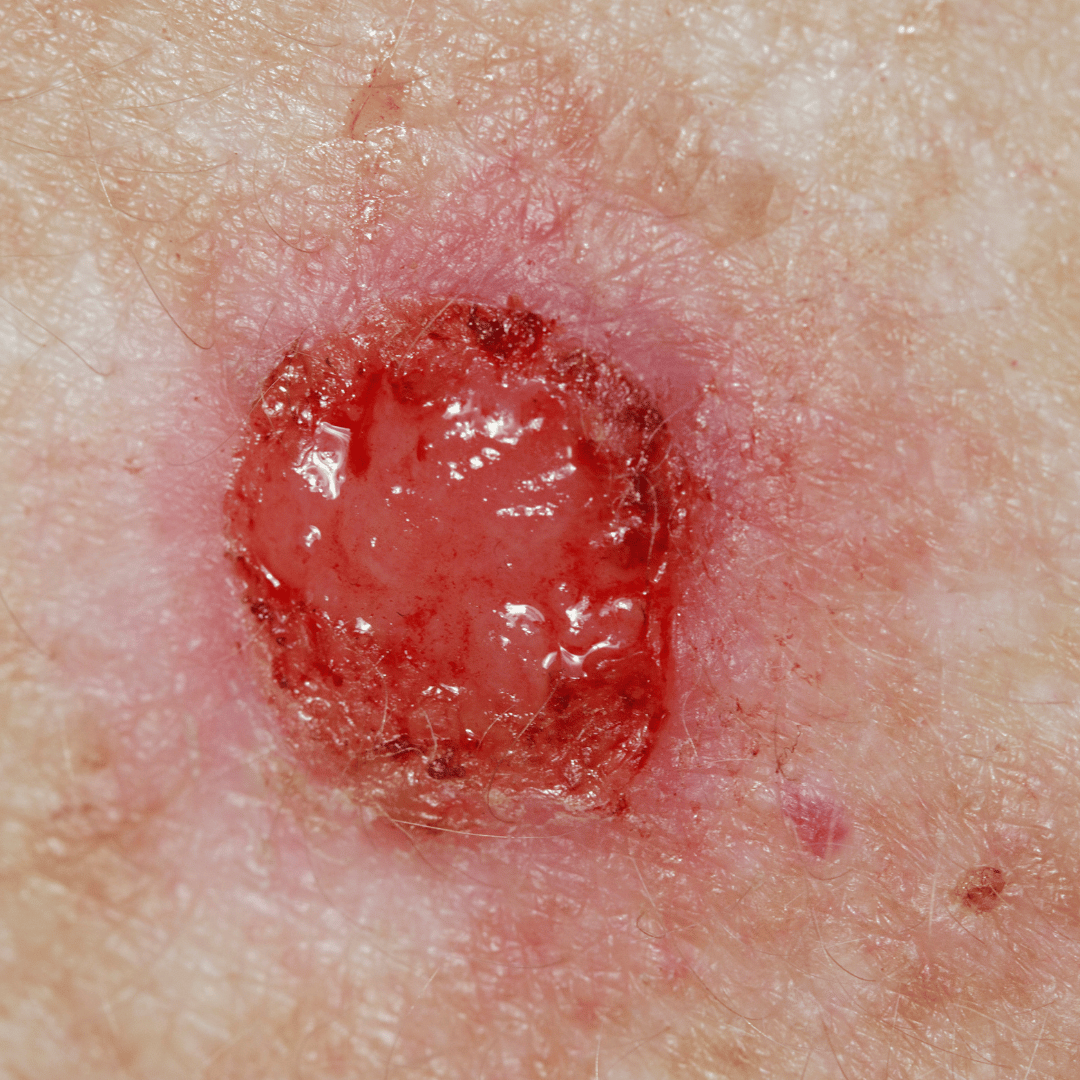
We assess each case individually to determine the most appropriate treatment, whether surgical excision, Mohs micrographic surgery, or another approach, ensuring complete clearance while preserving as much healthy tissue as possible.

MEDICAL GROUP
The Spierings Medical Group provides specialist diagnosis and treatment of basal cell carcinoma, offering consultant-led care for the most common form of skin cancer. Although BCC is generally slow-growing and unlikely to spread, it can cause significant local tissue damage if left untreated, making early recognition and appropriate management essential.
What is Basal Cell Carcinoma?
Basal cell carcinoma (BCC) is the most common form of skin cancer, arising from the basal cells located in the deepest layer of the epidermis. It typically develops on sun-exposed areas of the body, particularly the face, neck, and ears.
BCC is generally slow-growing and has a low risk of spreading to other parts of the body. However, if left untreated, it can become locally invasive, causing significant tissue damage and disfigurement. Although often considered less aggressive than other skin cancers, early recognition and appropriate management are essential to prevent progression and preserve surrounding healthy tissue. Basal cell carcinoma develops as a result of cumulative DNA damage within skin cells, most commonly induced by ultraviolet (UV) radiation. This damage leads to abnormal cell growth and the formation of cancerous lesions.
Clinical Patterns of Basal Cell Carcinoma
Basal cell carcinoma presents in several distinct clinical forms, each with characteristic features.
- Nodular Basal Cell Carcinoma - The most common subtype, appearing as a pearly or translucent bump, often with visible blood vessels (telangiectasia). It may ulcerate over time, forming what is sometimes described as a non-healing sore.
- Superficial Basal Cell Carcinoma - Presents as a flat, scaly, reddish patch, often resembling eczema or psoriasis. It tends to grow slowly and may be mistaken for benign skin conditions.
- Pigmented Basal Cell Carcinoma - Contains increased melanin, giving the lesion a darker appearance. It may resemble melanoma, requiring careful clinical evaluation.
- Morphoeaform (Sclerosing) Basal Cell Carcinoma - A less common but more aggressive form, appearing as a scar-like, firm, pale area with ill-defined borders. It tends to grow deeper into the skin.
- Infiltrative Basal Cell Carcinoma - Characterised by subtle, spreading growth beneath the skin surface, often making clinical margins difficult to define.
What Causes Basal Cell Carcinoma?
Basal cell carcinoma is primarily linked to cumulative sun exposure, but several contributing factors may increase risk:
- Ultraviolet (UV) radiation - Chronic exposure to sunlight or artificial sources such as tanning beds is the leading cause of DNA damage in skin cells
- Fair skin types - Individuals with lighter skin, hair, and eye colour are more susceptible due to lower levels of protective melanin
- Age and cumulative exposure - Risk increases over time with prolonged sun exposure, although cases are increasingly seen in younger individuals
- History of sunburns - Intermittent, intense UV exposure, especially during childhood, can significantly increase risk
- Immunosuppression - Reduced immune function may impair the body's ability to repair damaged cells
- Genetic predisposition - Certain genetic conditions or family history may contribute to increased susceptibility
How is Basal Cell Carcinoma Treated?
Management of basal cell carcinoma is guided by the type, size, location, and depth of the lesion. Early treatment is highly effective and aims to completely remove the cancer while preserving as much healthy tissue as possible.
- Surgical Excision - The most common treatment, involving removal of the lesion with a margin of healthy tissue to ensure complete clearance.
- Mohs Micrographic Surgery - A highly precise technique where the cancer is removed layer by layer and examined in real time. It is particularly useful for high-risk or facial lesions where tissue preservation is important.
- Curettage and Electrodessication - A minimally invasive approach suitable for select superficial lesions, involving scraping away the tumour followed by controlled cauterisation.
- Topical Treatments - Certain superficial basal cell carcinomas may be treated with prescription creams that stimulate the immune response or target abnormal cells.
- Radiotherapy - May be considered in cases where surgery is not suitable, particularly in older patients or difficult anatomical areas.
- Adjunctive Skincare and Photoprotection - Long-term management includes minimizing further skin damage and reducing the risk of recurrence. Daily use of broad-spectrum sunscreen is essential, particularly in high UV environments. Protective measures such as wearing hats, seeking shade, and avoiding peak sun hours play a critical role in prevention. Regular skin examinations, both self-assessment and professional evaluation, are important for early detection of new or recurring lesions. Basal cell carcinoma is highly treatable, especially when identified early. While it rarely spreads, delayed management can lead to more extensive local involvement. A proactive, prevention-focused approach remains central to maintaining long-term skin health.

Choosingtherightdoctororclinicshouldn'tfeelrushed.
If you have a question or want to know more before booking, just ask!