
Keloid Scars
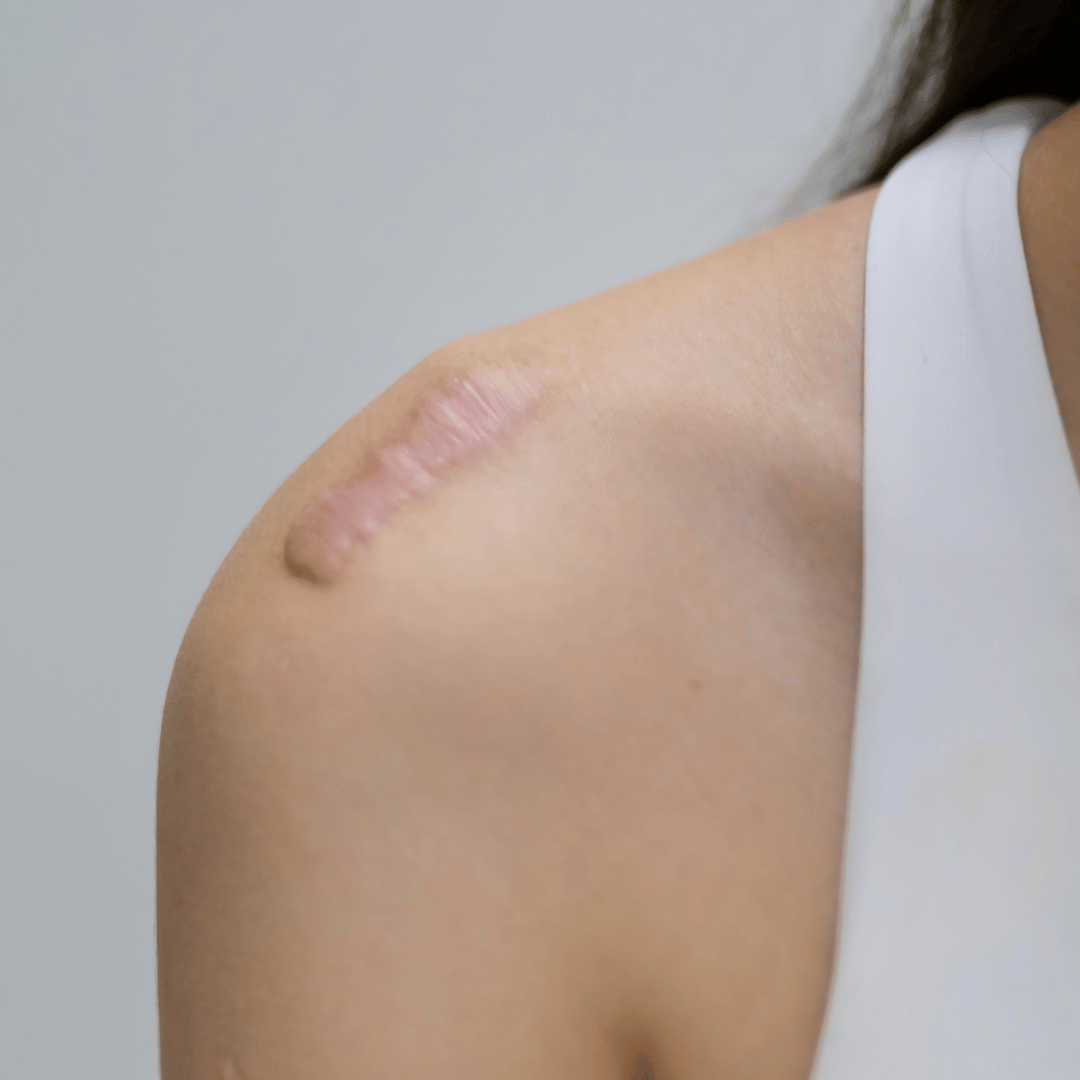
We take a measured, combination-based approach tailored to the stage, size, and location of the scar, with honest guidance about what treatment can realistically achieve and structured follow-up to monitor response over time.

MEDICAL GROUP
The Spierings Medical Group provides specialist management of keloid scars, offering consultant-led, evidence-based care for patients with active or established keloids. Keloids represent a failure of the skin's normal regulatory mechanisms during wound healing, and their management is inherently challenging as no single treatment is universally effective and recurrence is a recognised feature.
What is a Keloid Scar?
A keloid scar is a form of abnormal wound healing in which the skin produces excessive collagen, resulting in a raised, firm growth that extends beyond the boundaries of the original injury. Unlike normal scars, which gradually remodel and flatten, keloids represent a failure of the skin's regulatory mechanisms. The repair process does not switch off, leading to continued tissue deposition over time. From a clinical perspective, keloids are not simply cosmetic irregularities, they reflect a biological dysregulation of healing, where structural repair becomes excessive and uncontrolled.
What Causes Keloid Scars?
Keloid formation is driven by a complex interaction between genetic predisposition and abnormal cellular signalling during wound healing. Key contributing factors include:
- Genetic susceptibility - A strong hereditary component is frequently observed, indicating an inherent tendency toward exaggerated scar formation
- Dysregulated collagen production - Fibroblasts produce excessive collagen beyond what is required for tissue repair, resulting in persistent scar growth
- Skin injury (often minor) - Keloids may develop after relatively minimal trauma, including acne, piercings, insect bites, or surgical wounds
- Skin type and ethnicity - Higher prevalence is seen in individuals with more pigmented skin, reflecting differences in fibroblast activity and healing response
- Anatomical tension - Areas such as the chest, shoulders, and earlobes are more prone due to mechanical stress on healing skin
The severity of a keloid does not correlate with the severity of the injury. Even trivial skin trauma may trigger significant scar formation in predisposed individuals.
What are the Types of Keloid Scars?
Keloids are defined by their extension beyond the original wound, but clinically they may present in different stages and morphologies.
- Early (Active) Keloids - These are typically erythematous, raised, and symptomatic, often associated with itching or tenderness. They represent the active phase of collagen overproduction.
- Mature Keloids - Over time, keloids may become firmer, less vascular, and more stable in appearance. However, they do not regress spontaneously.
- Nodular or Pedunculated Keloids - More prominent, localised growths that may appear rounded or elevated, particularly in areas such as the earlobes.
- Extensive (Plaque-like) Keloids - Larger lesions that spread widely beyond the original injury, forming thick, irregular plaques.
How are Keloid Scars Treated?
Management of keloids is inherently challenging and requires a measured, evidence-based approach. No single treatment is universally effective, and recurrence remains a recognised feature.
- Intralesional Therapy - Corticosteroid injections remain a cornerstone, acting to suppress fibroblast activity and reduce collagen production.
- Silicone-Based Therapy - Silicone gels or sheets are used to modulate the local healing environment, particularly in early-stage scars.
- Cryotherapy - Targeted freezing can reduce scar bulk, often used in combination with other modalities.
- Laser and Energy-Based Treatments - These are used to improve vascularity, reduce erythema, and soften scar texture as part of combination therapy.
- Surgical Excision (With Adjunctive Therapy) - Removal may be considered in selected cases, though recurrence risk is high unless combined with additional treatments.
Minimising unnecessary skin trauma is particularly important in individuals prone to keloid formation. Sun protection also plays a role, as ultraviolet exposure may worsen pigmentation and visibility of scar tissue. Structured follow-up allows for early adjustment of treatment and improved long-term control.

Choosingtherightdoctororclinicshouldn'tfeelrushed.
If you have a question or want to know more before booking, just ask!