
Skin Punch Biopsies
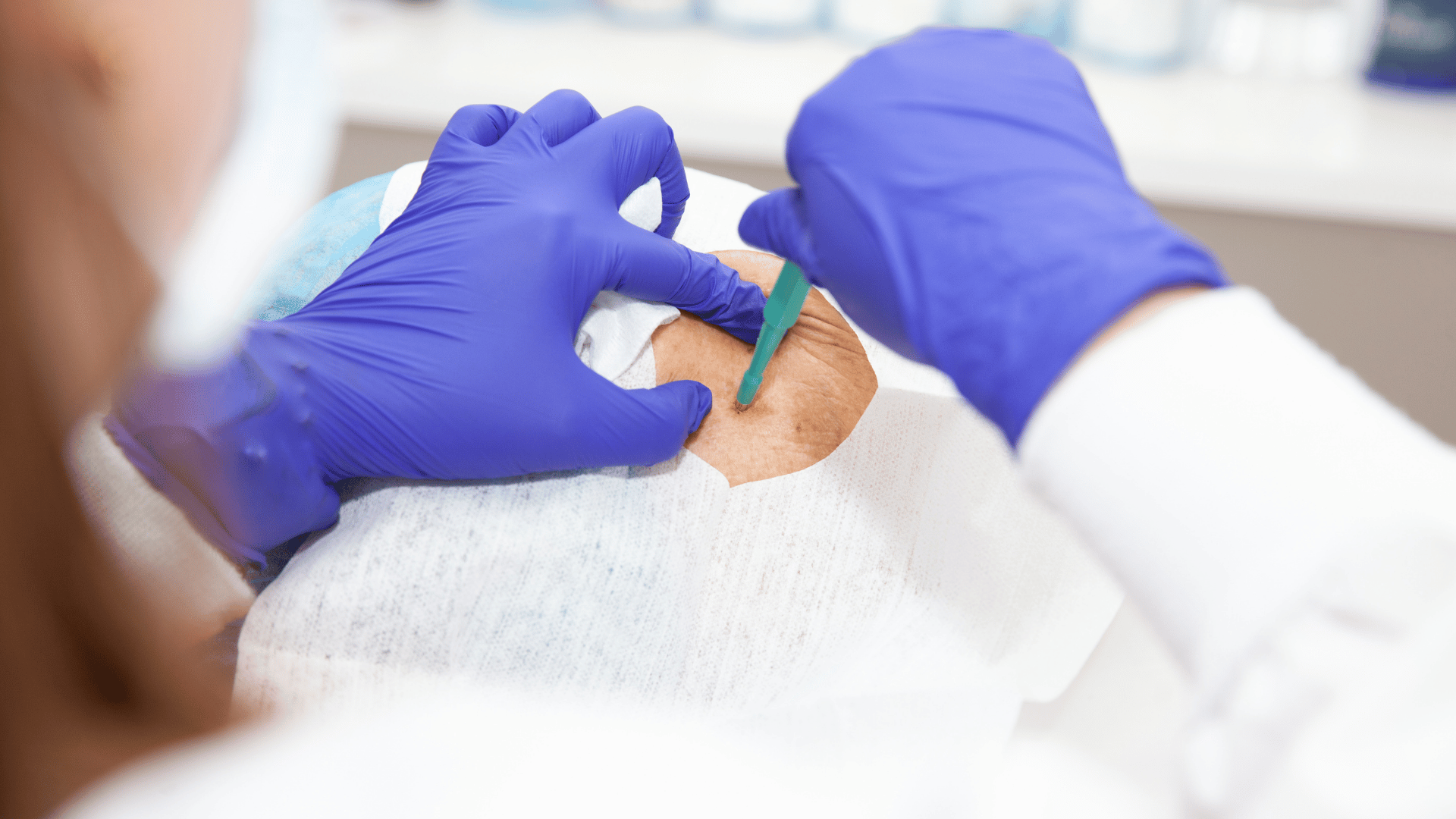
The procedure is minor, performed under local anaesthetic, and takes 15 to 30 minutes. The biopsy itself is entirely painless once anaesthesia has taken effect.

MEDICAL GROUP
The Spierings Medical Group performs punch biopsy as a diagnostic procedure, allowing a consultant dermatologist to obtain a small, full-thickness cylindrical sample of skin for microscopic examination. The histopathological analysis frequently provides definitive diagnostic information that is impossible to obtain from clinical examination alone — making punch biopsy one of dermatology's most valuable diagnostic tools.
A Precise Diagnostic Procedure — What to Expect, Step by Step
A punch biopsy is a minor yet diagnostically powerful surgical procedure that allows a dermatologist to obtain a small, full-thickness cylindrical sample of skin for microscopic examination. Using a sterile circular blade, the dermatologist removes a precisely defined tissue core encompassing the epidermis, dermis, and — where clinically relevant — the superficial subcutaneous fat.
The tissue sample is then submitted to a specialist dermatopathology laboratory, processed, sectioned, and examined under high-magnification microscopy. The histopathological analysis frequently provides definitive diagnostic information impossible to obtain from clinical examination alone.
When is a Punch Biopsy Recommended?
- Unexplained persistent rashes or inflammatory conditions unresponsive to empirical treatment
- Suspected psoriasis, lichen planus, or other papulosquamous disorders
- Suspected autoimmune skin conditions — including lupus and dermatomyositis
- Suspicious pigmented lesions requiring tissue diagnosis
- Suspected skin malignancy — basal cell carcinoma, squamous cell carcinoma, melanoma
- Chronic wounds or ulcers requiring diagnosis
- Unusual cutaneous growths or nodules
The Procedure, Step by Step
- Step 1 — Local Anaesthesia. The target area is numbed with a local anaesthetic injection. Patients typically experience a brief sting from the injection itself; the biopsy procedure is completely painless once anaesthesia has taken effect.
- Step 2 — Tissue Sampling. A sterile circular punch blade — 2 to 6 mm in diameter, selected according to clinical indication — is rotated through the skin with controlled pressure to obtain a cylindrical tissue core.
- Step 3 — Wound Management. Depending on biopsy size and anatomical location, the wound may heal by secondary intention or be closed with one or two sutures. Wound care approach is discussed individually with each patient.
- Step 4 — Laboratory Analysis. A consultant dermatopathologist examines histological architecture, cellular morphology, and immunological staining patterns as required. Results are typically available within 1 to 3 weeks.
What to Expect
- Duration: 15 to 30 minutes including preparation and wound care.
- Anaesthesia: Local anaesthetic — the procedure itself is painless.
- Downtime: Minimal — normal activities resumable immediately.
- Results: Typically 1 to 3 weeks depending on analysis complexity.
- Sessions: Usually one biopsy; additional sampling occasionally required.
Risks, Preparation, and Aftercare
Punch biopsies are safe, widely performed procedures. Possible risks include temporary bleeding, bruising, mild post-procedural discomfort, infection, and scarring — though significant complications are uncommon. Rare allergic reactions to local anaesthetic should be disclosed during consultation.
Before the procedure:
- Inform your dermatologist of all current medications, particularly anticoagulants
- Disclose any bleeding disorders and known allergies
After the procedure:
- Keep the wound clean and dry
- Change dressings as instructed
- Avoid manipulating the healing site
- Attend any scheduled stitch removal
- Contact the clinic promptly if signs of infection develop
Choosingtherightdoctororclinicshouldn'tfeelrushed.
If you have a question or want to know more before booking, just ask!