
CO2 Laser Resurfacing (Alma Pixel)
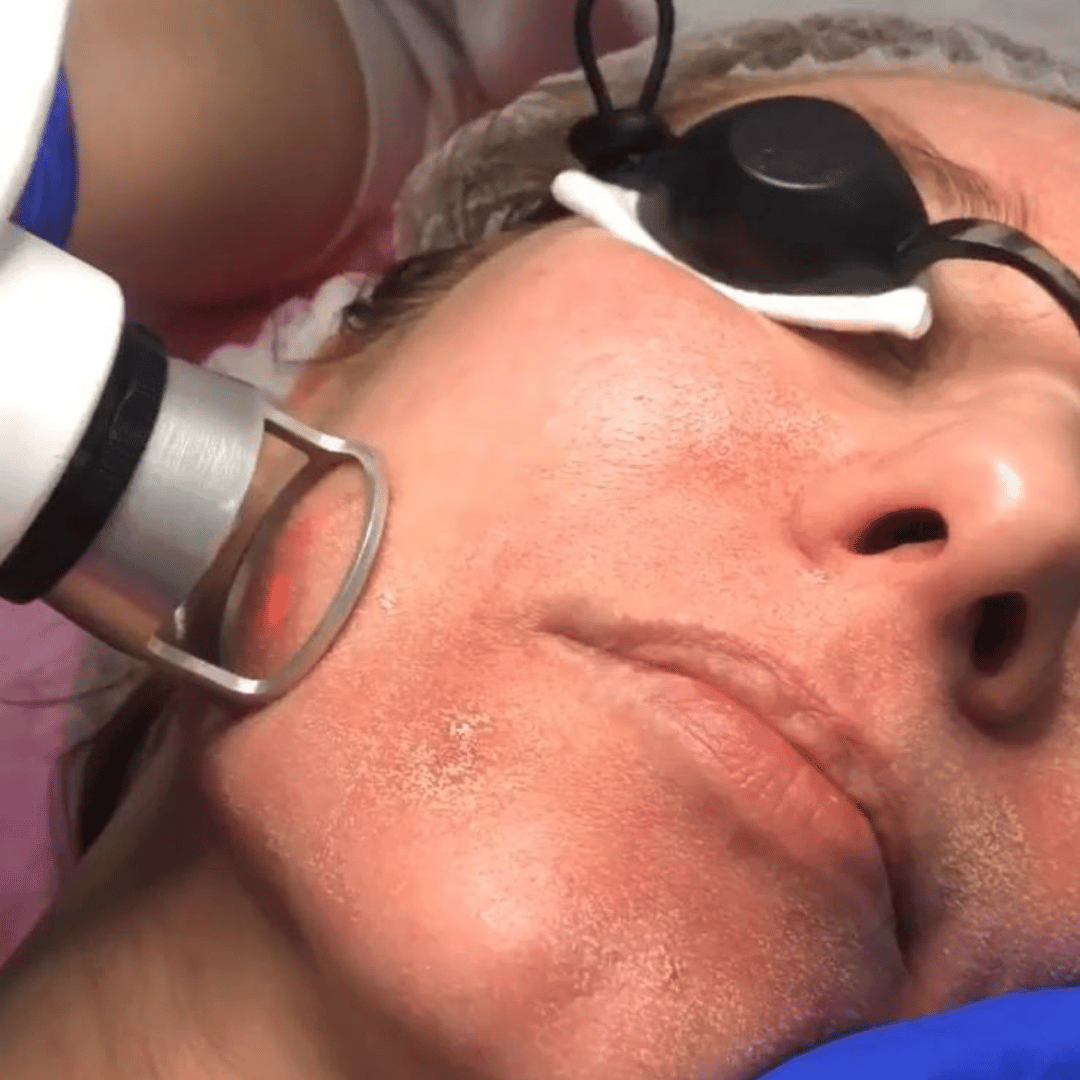
Every treatment is overseen by our consultant dermatologist and preceded by a thorough clinical assessment. We are explicit about what to expect, what the recovery involves, and what results are realistically achievable before any treatment begins.

MEDICAL GROUP
The Spierings Medical Group offers CO2 laser resurfacing using the Alma Pixel, providing consultant-led treatment for patients looking to address acne scarring, fine lines, skin texture, pigmentation, and benign lesion removal. CO2 laser is one of the most clinically significant resurfacing technologies available, producing measurable structural change in the skin through controlled tissue remodelling.
How CO2 Laser Works
CO2 laser operates at a wavelength of 10,600 nanometers, a frequency of infrared light that is very precisely absorbed by water in skin cells. Because human tissue is predominantly water, the laser energy is absorbed at the exact point of contact, causing controlled vaporisation of the targeted tissue.
This controlled removal of skin triggers the body's natural wound healing cascade, stimulating collagen synthesis and the generation of new, healthier skin cells. The result is measurable improvement in skin texture, tone, and structure that continues to develop for up to 12 months following treatment.
The Alma Pixel delivers this as fractional CO2, meaning thousands of microscopic treatment zones are created across the skin while leaving surrounding tissue intact. This accelerates healing significantly compared to fully ablative resurfacing, while still stimulating substantial collagen remodelling. It broadens the range of patients and concerns that can be treated without the most intensive recovery period.
What CO2 Laser Treats
CO2 laser is particularly well suited to concerns that require a structural change in the skin rather than a surface-level improvement.
- For acne scarring, it ablates the irregular or depressed scar tissue surface and stimulates collagen to fill and remodel the scar from below. Clinical studies consistently demonstrate 50 to 75 percent improvement in scar appearance following a course of fractional CO2 treatment. Rolling and boxcar scar subtypes respond particularly well. Ice pick scars, which extend deeper into the dermis, typically respond less completely and may require a combination approach.
- For fine lines and wrinkles, it removes aged surface skin while the heat stimulates new collagen, firming the dermis and smoothing the overlying surface over the months following treatment.
- For pigmentation and sun damage, it vaporises pigmented cells and sun-damaged tissue, with new skin emerging more evenly toned during healing.
- For benign lesion removal including seborrhoeic keratoses, dermatofibromas, viral warts, and skin tags, CO2 allows precise ablation with minimal surrounding tissue damage. A single session is usually sufficient.
- For general skin resurfacing and rejuvenation, it removes dull, sun-damaged, or irregularly textured skin, replacing it with smoother, more evenly toned skin over the healing period.
How Many Sessions Are Needed
For lesion removal, a single session is usually sufficient. For acne scarring and resurfacing, most patients require 3 to 5 fractional sessions to achieve their desired outcome. Sessions are spaced a minimum of 6 to 8 weeks apart to allow complete healing and collagen remodelling before the next treatment. Results continue to develop for up to 12 months after each session, so patience is an important part of the process.
What to Expect During and After Treatment
CO2 laser is performed under topical anaesthetic cream applied 30 to 60 minutes before treatment, often supplemented by local anaesthetic for more intensive procedures. Most patients describe the sensation during fractional treatment as heat and pressure, which is manageable and brief.
Following treatment, the skin will feel sunburned and tender. This typically peaks at 24 to 48 hours and is well managed with the prescribed aftercare. Fractional CO2 typically involves 5 to 7 days of redness, swelling, and skin peeling, after which most patients feel comfortable returning to work and normal activity with some residual pinkness that can be covered with makeup. We will be explicit about what to expect at your consultation so there are no surprises.
Makeup should not be applied until the skin has fully re-epithelialised, which takes approximately 7 to 10 days after fractional treatment. Applying makeup to an actively healing skin surface introduces infection risk and can disrupt healing.
Following CO2 laser, the new skin is exceptionally vulnerable to UV-induced pigmentation for a minimum of 3 to 6 months. SPF 50+ must be applied every morning without exception regardless of weather or season. This is one of the most important aftercare instructions we give, and failure to follow it significantly increases the risk of post-inflammatory hyperpigmentation.
Important Considerations
- CO2 laser carries a significantly higher risk of post-inflammatory hyperpigmentation in patients with darker skin tones (Fitzpatrick Types IV, V, and VI). We approach these skin tones with considerable caution, and in many cases will recommend an alternative treatment modality. Where CO2 is appropriate for a darker skin tone, a careful pre-treatment protocol including pigment-suppressing agents and extended sun avoidance is essential.
- Active tan, residual UV pigmentation, and self-tanning products are all contraindications. The treatment area must be completely free of any tan for a minimum of four weeks before treatment.
- We do not treat patients with an active cold sore, skin infection, or inflammatory skin flare in or near the treatment area.
- For patients currently taking oral isotretinoin, this is assessed individually by Dr. Natalia Spierings rather than by a blanket restriction. Please disclose this at the time of booking so your care can be planned appropriately. Tretinoin use is similarly reviewed on a per-patient basis at consultation rather than by a fixed protocol.
- We do not perform CO2 laser during pregnancy. This is our standard clinical position based on the principle of precaution rather than confirmed harm.
- Acne must be well controlled before commencing CO2 laser for acne scarring. CO2 laser improves existing scarring but does not prevent new scars forming if acne remains active.
Preparing for Treatment
- Apply a broad-spectrum SPF 50+ to the treatment area every morning for a minimum of four weeks before your appointment. If a pre-treatment pigment-suppressing regimen has been prescribed, use it consistently in the weeks leading up to your session.
- Plan your downtime in advance. Block out 5 to 7 days for fractional treatment. This is a clinical requirement, not a suggestion.
- Arrive with the treatment area clean and completely free of all products including moisturiser, SPF, and cosmetics. Do not use chemical exfoliants including AHAs, BHAs, or vitamin C on the treatment area for 5 to 7 days before treatment. Retinoid guidance will be given individually at consultation.
- Do not schedule treatment if you have an active cold sore, skin infection, or inflammatory flare in the treatment area. Disclose all medications, supplements, and changes to your medical history at or before your appointment.
- A full consultation is required before any CO2 laser treatment. This is never a same-day procedure.

Choosingtherightdoctororclinicshouldn'tfeelrushed.
If you have a question or want to know more before booking, just ask!