
Molluscum Contagiosum
Management depends on the number of lesions, rate of spread, patient age, and associated symptoms. We take a considered approach to each case, advising on the most appropriate strategy and ensuring families feel clearly informed and supported throughout.

MEDICAL GROUP
The Spierings Medical Group provides specialist assessment and management of molluscum contagiosum, offering consultant-led care for children and adults with this common viral skin infection. While molluscum is benign, it can be persistent, spread across the skin, and cause significant concern, particularly in younger patients or those with underlying eczema.
What is Molluscum Contagiosum?
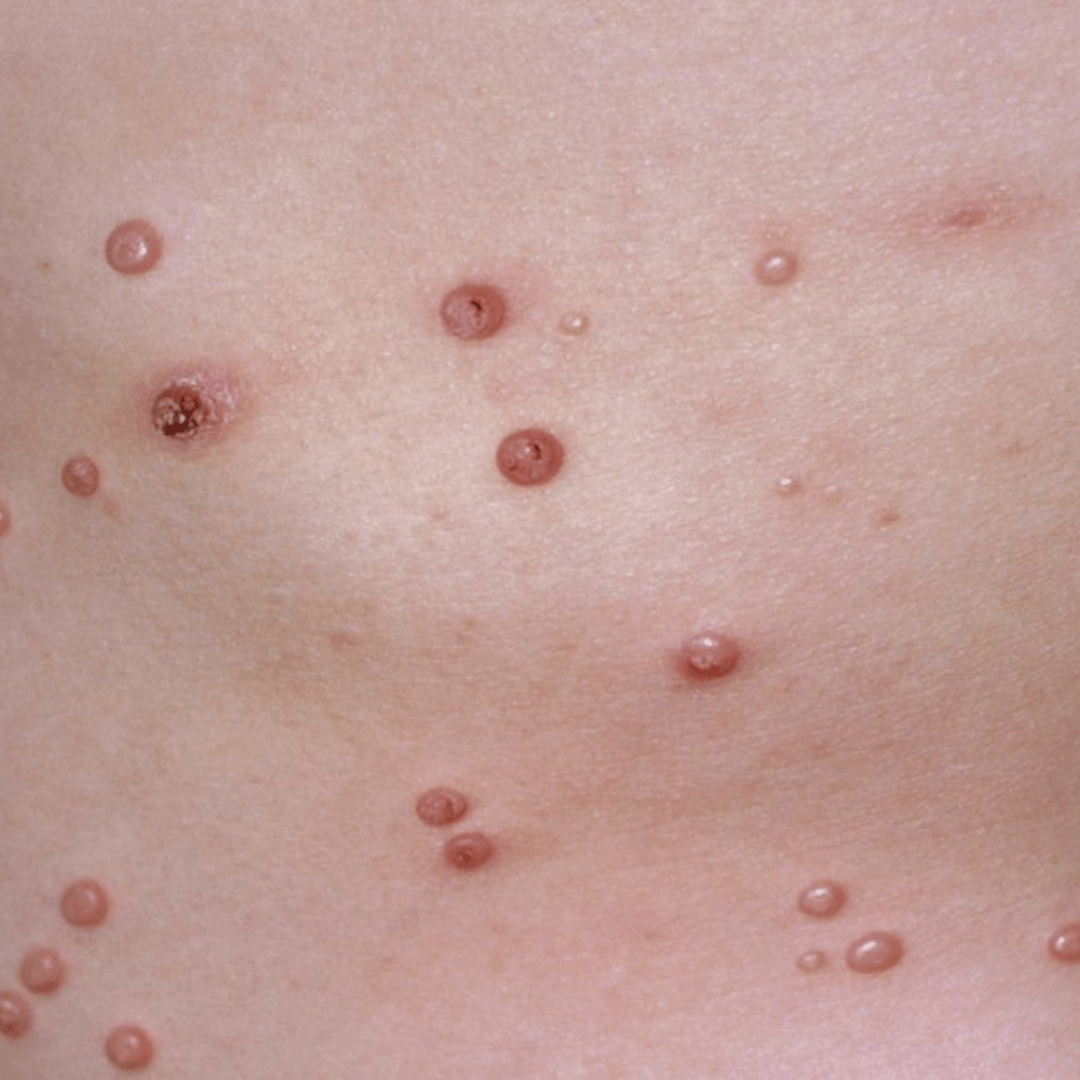
Molluscum contagiosum is a common viral skin infection caused by a poxvirus. It presents as small, firm, dome-shaped papules that are typically flesh-coloured, pearly, or pink, often with a characteristic central indentation. These lesions are confined to the outermost layer of the skin (epidermis) and contain a core of viral material. While they may resemble warts or acne, molluscum is a distinct and benign condition.
It is most frequently seen in children, where lesions tend to appear on the trunk and limbs. In adults, it may occur in the genital region and can be transmitted through close or intimate skin contact. Although harmless, the condition can be persistent and, in some cases, spread across the skin if not appropriately managed.
What are the Types of Molluscum Contagiosum?
From a clinical perspective, molluscum contagiosum presents in a relatively uniform manner. However, virologically, it is classified into four subtypes (MCV-1 to MCV-4).
- MCV-1 - The most common strain globally, particularly in children.
- MCV-2 - More frequently associated with adult cases and transmission through close physical contact.
The specific subtype does not typically alter the clinical appearance or treatment approach. Instead, the pattern of distribution and mode of transmission are of greater clinical relevance.
What Causes Molluscum Contagiosum?
Molluscum contagiosum is a superficial infection confined to the epidermis. Unlike systemic viral illnesses, it does not circulate within the bloodstream. The virus spreads through:
- Direct skin contact - Including close personal or intimate contact
- Fomite transmission - Via shared items such as towels, clothing, or grooming tools
- Autoinoculation - Self-spread from one area of the body to another, typically through scratching or manipulation of lesions
Once introduced into the skin, the virus replicates within keratinocytes, leading to the formation of the characteristic papules. The persistence of molluscum is not due to severity of infection, but rather delayed immune recognition. Clearance occurs once the immune system mounts an effective response.
How is Molluscum Contagiosum Treated?
Management depends on the number of lesions, rate of spread, patient age, and associated symptoms. In many cases, a conservative approach is appropriate.
- Observation (Expectant Management) - In otherwise healthy individuals, lesions often resolve spontaneously as the immune system recognises and clears the virus. This process may take several months.
- Physical Removal (In-Clinic) - Where lesions are spreading, symptomatic, or cosmetically concerning:
- Cryotherapy involves application of liquid nitrogen to induce local destruction
- Curettage is mechanical removal of the lesion under controlled conditions
- Cantharidin application is a topical agent applied in clinic to induce blistering and separation of the lesion
- Topical Medical Therapy - Selected cases may benefit from prescription treatments aimed at stimulating local immune response or disrupting viral activity. This includes potassium hydroxide solutions, topical retinoids, and immune-modulating agents.
Minimising spread is a key component of management. Lesions should not be picked or manipulated, as this can facilitate transmission to adjacent skin. Where appropriate, affected areas may be kept covered to reduce the risk of contact spread, and personal items such as towels or razors should not be shared. Maintaining skin barrier integrity is particularly important, especially in individuals with underlying eczema, where disruption of the barrier can increase susceptibility. If lesions become increasingly red, tender, or inflamed, the possibility of secondary bacterial infection should be considered.

Choosingtherightdoctororclinicshouldn'tfeelrushed.
If you have a question or want to know more before booking, just ask!