
Melasma
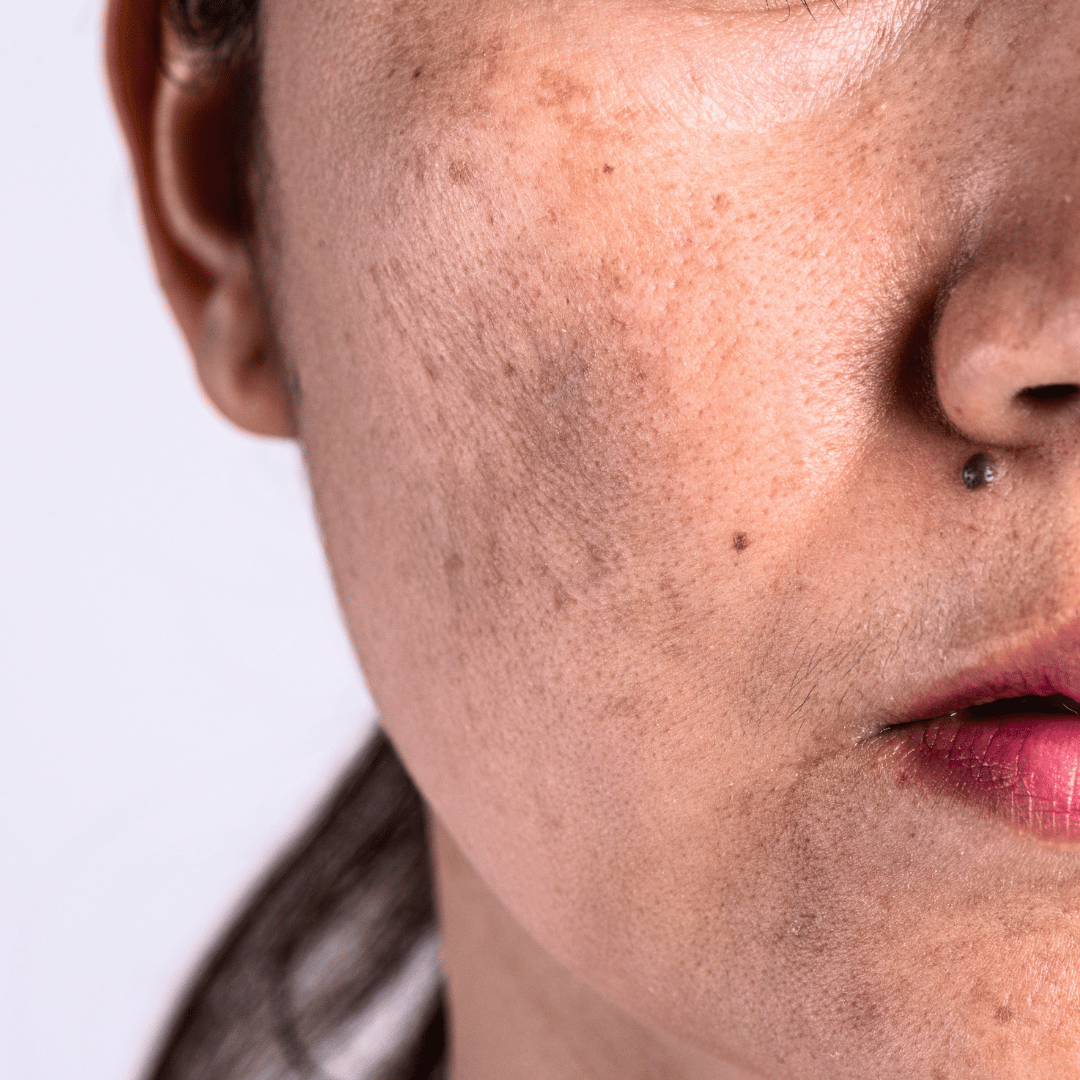
Getting the diagnosis right is the foundation of effective care. From there, we build a treatment plan that is honest about what is achievable and designed to deliver sustained improvement over time.

MEDICAL GROUP
The Spierings Medical Group provides specialist diagnosis and long-term management of melasma, offering evidence-based care for patients dealing with persistent brown patches and uneven skin tone. Melasma is a chronic pigmentary condition that requires careful, structured management rather than aggressive or trend-driven treatment.
What is Melasma?
Melasma is not merely a cosmetic concern, itis a chronic skin disorder rooted in pigment dysregulation. It presents assymmetrical brown-to-grey patches, most commonly appearing across the cheeks, forehead, nose, upper lip, and chin. In less frequent cases, it may extend to the neck, arms, or other sun-exposed areas.
While melasma is medically harmless and non-contagious, its persistent nature can significantly affect visible skin tone and overall complexion. It is more prevalent in women and individuals with darker skin phototypes, though it can also occur in men.
A Closer Look at Melasma Biology
Melasma is best understood as a form of epidermal hyperpigmentation. Histological studies comparing affected and unaffected skin demonstrate increased melanin concentration throughout the epidermis, particularly concentrated in its basal layer where pigment production naturally occurs. This confirms that melasma is driven by heightened melanocytic activity rather than deeper dermal deposition. This debunked the concept of epidermal and dermal melasma as melasma is epidermal itself in nature.
What Causes Melasma?
The exact origin of melasma remains complex and multifactorial. At its core lies the overactivation of melanocytes, the cells responsible for pigment production. Several well-established triggers include:
- Hormonal influences: Pregnancy, oral contraceptives, and hormone replacement therapy
- Ultraviolet (UV) exposure: Sunlight remains the most significant external trigger
- Artificial light sources: Tanning beds and certain phototherapy devices
- Genetic predisposition: A family history increases susceptibility
These factors amplify melanin production, leading to the visible patches characteristic of melasma.
How is melasma treated?
While melasma may occasionally resolve spontaneously, particularly when hormonally induced, it is typically chronic and requires long-term management. Although no definitive cure exists, modern dermatology offers highly effective strategies to significantly reduce pigmentation and restore a more even skin tone.
- Gold Standard: Triple Combination Therapy- Widely recognized by leading dermatological authorities, triple combination therapy remains the most effective topical treatment. This prescription formulation combines:
- Hydroquinone – A powerful tyrosinase inhibitor that suppresses new melanin formation
- Retinoids (e.g., tretinoin) – Accelerate cellular turnover, promoting the removal of pigmented cells and enhancing ingredient penetration
- Mild corticosteroids – Minimize inflammation and irritation, which can otherwise exacerbate pigmentation
Together, these components act synergistically to interrupt the pigment-production pathway.
- Advanced Systemic Support - For resistant or recurrent cases, oral tranexamic acid has emerged as a valuable adjunct. By modulating vascular and inflammatory pathways, it helps reduce internal triggers that contribute to persistent pigmentation.
- Photoprotection -In melasma management, light exposure is the primary driver of recurrence. Melanocytes in affected skin are highly reactive, not only to UV radiation but also to visible light. A comprehensive photoprotection strategy is essential including use of broad-spectrum SPF 50+ with strong UVA protection (PA++++)
Visible light defense with the application of tinted formulations containing iron oxides to block high-energy visible (HEV)light is recommended. Furthermore, added physical protection using wide-brimmed hats and UPF-rated clothing for daily shielding. Strict avoidance of tanning or artificial UV exposure is advised.
While chemical peels and laser treatments are often marketed for pigmentation, they must be approached cautiously. Excessive heat or aggressive resurfacing can provoke post-inflammatory hyperpigmentation (PIH), potentially worsening the condition.
Such interventions are best reserved as supportive treatments. introduced only after the skin has been stabilized with a medical regimen.
Visible improvement typically requires 8-12 weeks of disciplined treatment. Once pigment levels are controlled, long-term maintenance becomes essential. Melanocytes retain a form of “biological memory,” making recurrence possible without continued care.
Melasma management is not about quick fixes, it is about precision, consistency, and scientifically guided care. With the right approach, it is possible to significantly reduce pigmentation, restore clarity, and maintain long-term skin balance.
Dr. Natalia’s Approach To Treatment of Melasma
Melasma is a type of skin pigmentation problem in which patients develop brown patches of skin discolouration on the face. The first step in treating this condition is establishing the correct diagnosis. Dr. Spierings does this by taking a complete history of your skin problem and your general health as well as examining your skin. Assuming there are no obvious underlying causes that need to be dealt with, Dr. Spierings will prescribe the appropriate topical (cream) treatment to lighten your melasma. Some patients require two different cream treatments – one for morning and one for evening –but not everybody.
The cream treatments are made in a special type of pharmacy called a compounding lab. The pharmacy in Dubai is called Fusion Apothecary, and the pharmacy in London for UK patients is Roseway Labs. For patients living in the European Union, Canada, the United States, Singapore or Australia, Fusion Apothecary in Athens and New York City can send compounded creams to those countries. The creams usually cost £60 (approximately AED 350) for a 30ml bottle, and a 30 ml bottle usually lasts for 1-2 months with daily application of the cream to the face. The cream is sent to you after your consultation once you have paid the pharmacy directly for your cream.
Please note Dr. Spiering does NOT use lasers, lights, microneedling or any type of ‘in office’ treatment to lighten melasma patches, aside from a high strength hydroquinone/tretinoin people in the appropriate patient.
Most patients with melasma require a follow-up after 3-4 months of treatment and then again at 6 months and then possibly annually if a long-term maintenance prescription cream is required to keep the melasma as close to clear as possible.

Choosingtherightdoctororclinicshouldn'tfeelrushed.
If you have a question or want to know more before booking, just ask!