
Electrolysis
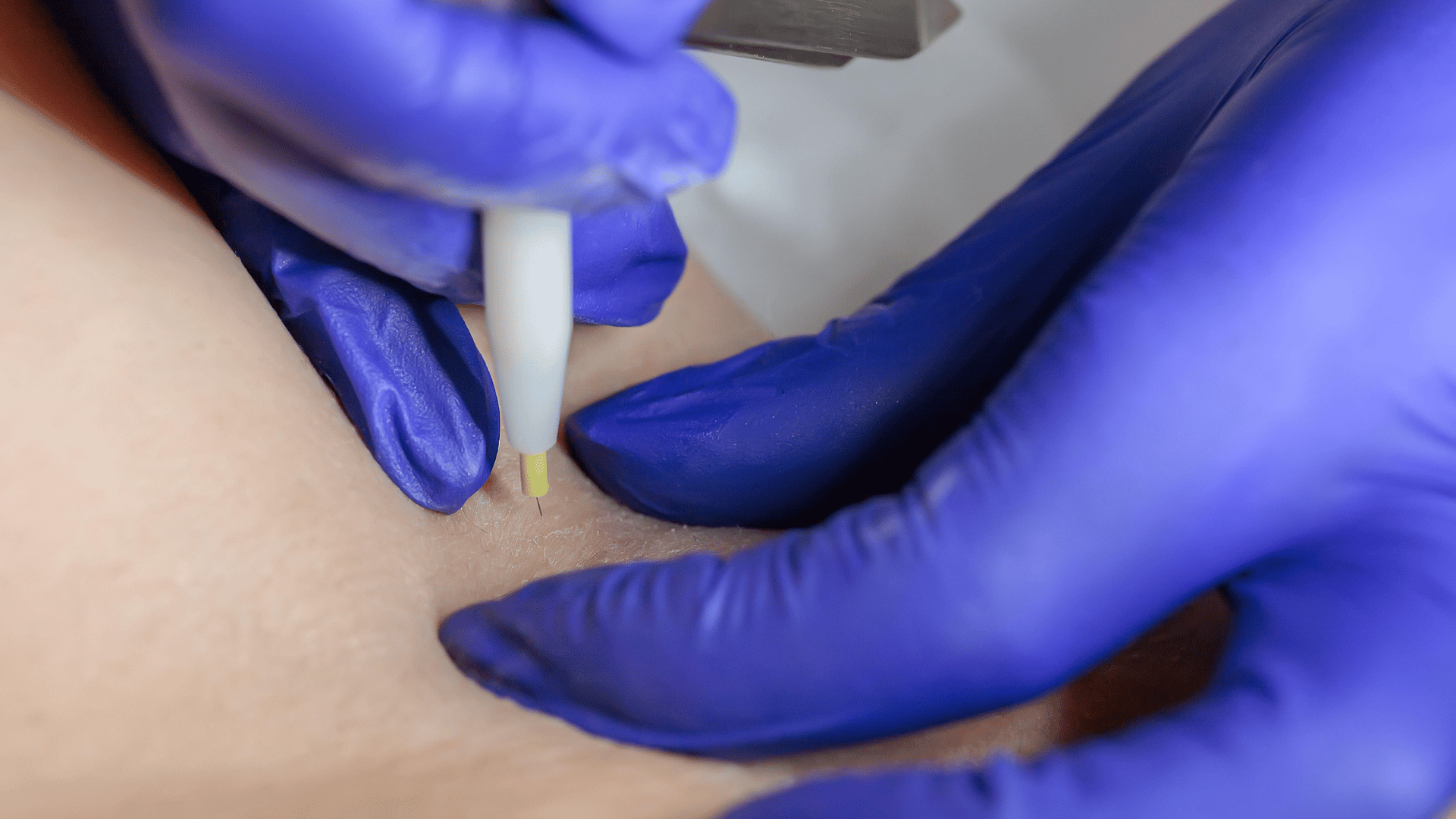
Electrolysis is particularly valuable for patients whose hair colour or skin tone makes laser unsuitable, for hairs in areas where laser cannot safely be used, and for those seeking the only truly permanent solution available in hair removal medicine.

MEDICAL GROUP
The Spierings Medical Group offers specialist electrolysis, providing the only hair removal method recognised as permanently effective by medical regulatory bodies worldwide. A fine, sterile probe is inserted into each individual follicle and a precisely calibrated electrical current is delivered, permanently destroying the growth centre. Unlike laser, electrolysis works on all hair colours and all skin tones — including blonde, red, grey, and white hair — without restriction.
How Electrolysis Works
A fine, sterile probe is inserted into each individual follicle and a precisely calibrated electrical current is delivered, permanently destroying the growth centre. Electrolysis is the only hair removal method recognised as permanently effective by medical regulatory bodies worldwide, and uniquely, it works on all hair colours and all skin tones — even over tattoos.
Why Multiple Sessions Are Necessary
A common source of confusion is why a single treatment is not enough. The answer lies in the biology of hair growth. At any given moment, each follicle on the body is at a different stage of its natural cycle — and treatment is only effective during one of those stages.
The four stages are anagen (active growth), catagen (transition), telogen (resting and shedding), and exogen (new cycle beginning). Treatment targets only the anagen phase — this is when the hair is actively connected to the follicle and can be reached. Hairs in catagen or telogen phases will not be affected and must be treated in a subsequent session once they have re-entered anagen. This is why a course of treatment — not a single session — is the clinical standard.
How Many Sessions Will I Need?
Because each hair is treated individually, the total hours required vary significantly by area and hair density. Most areas require treatment over 12 to 18 months to achieve full clearance. A personalised estimate will be provided at your initial consultation.
Hormonal changes — including pregnancy, menopause, and certain medications — can stimulate new follicle activity over time. Occasional top-up sessions may be recommended following a completed course.
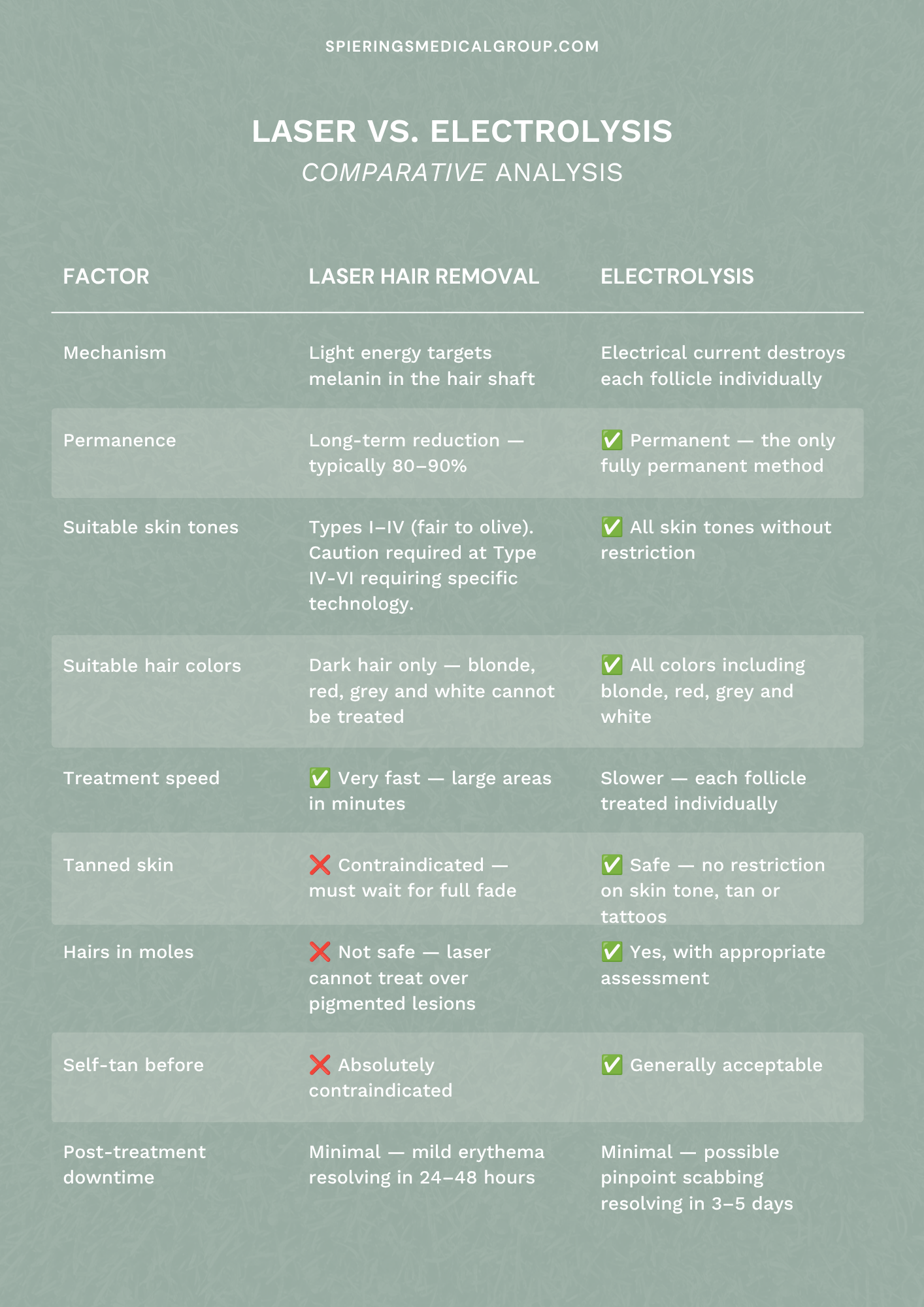
Laser vs Electrolysis — How Do They Compare?
These are not competing treatments — they are complementary tools. The right choice depends on your skin tone, hair colour, treatment area, and goals. Many patients benefit from a combination of both.
Selecting the Right Treatment for Your Skin and Hair Type
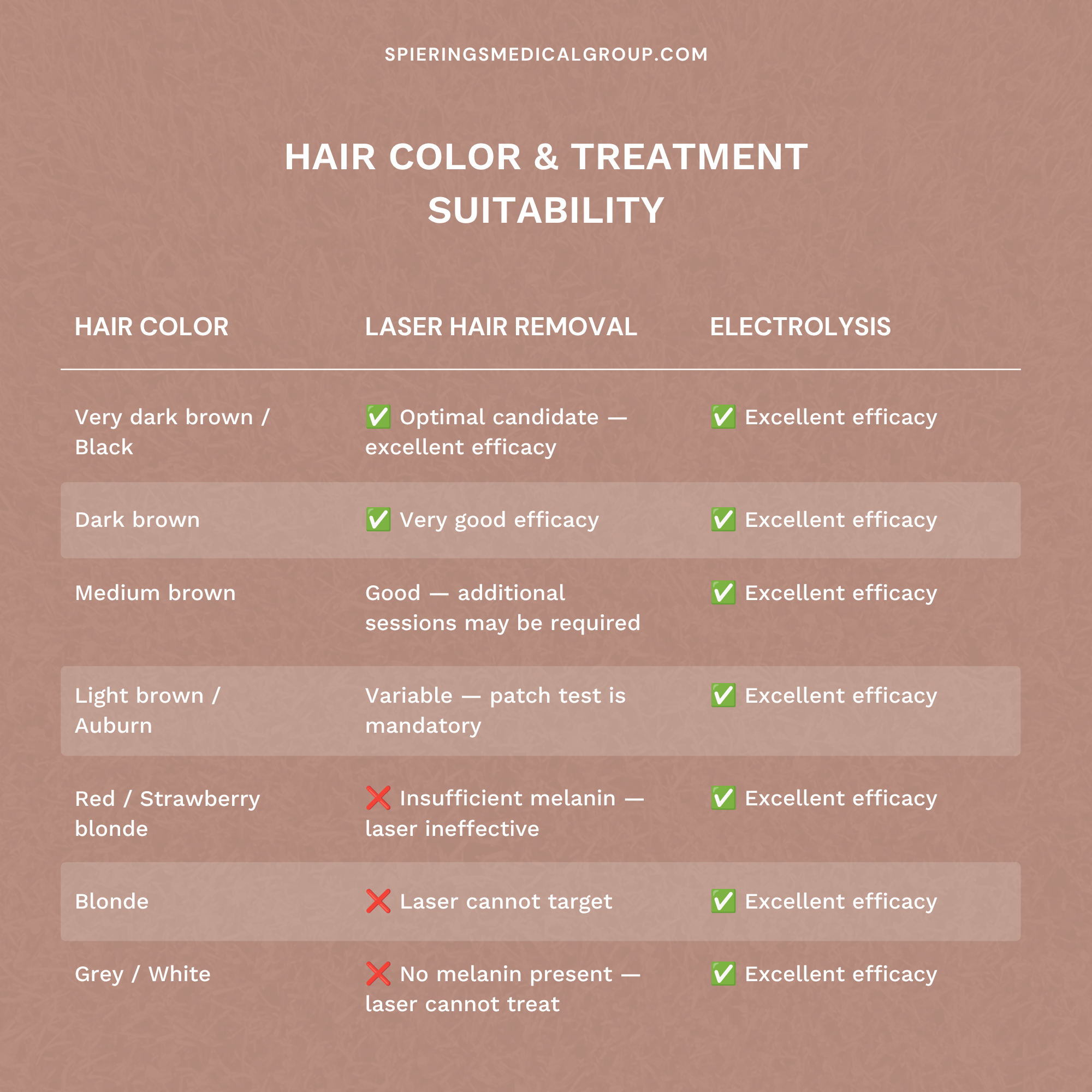
Appropriate patient selection is fundamental to both safety and efficacy. Electrolysis carries no such restriction and is clinically appropriate for all patients, regardless of skin phototype or hair colour.
What Happens After Treatment
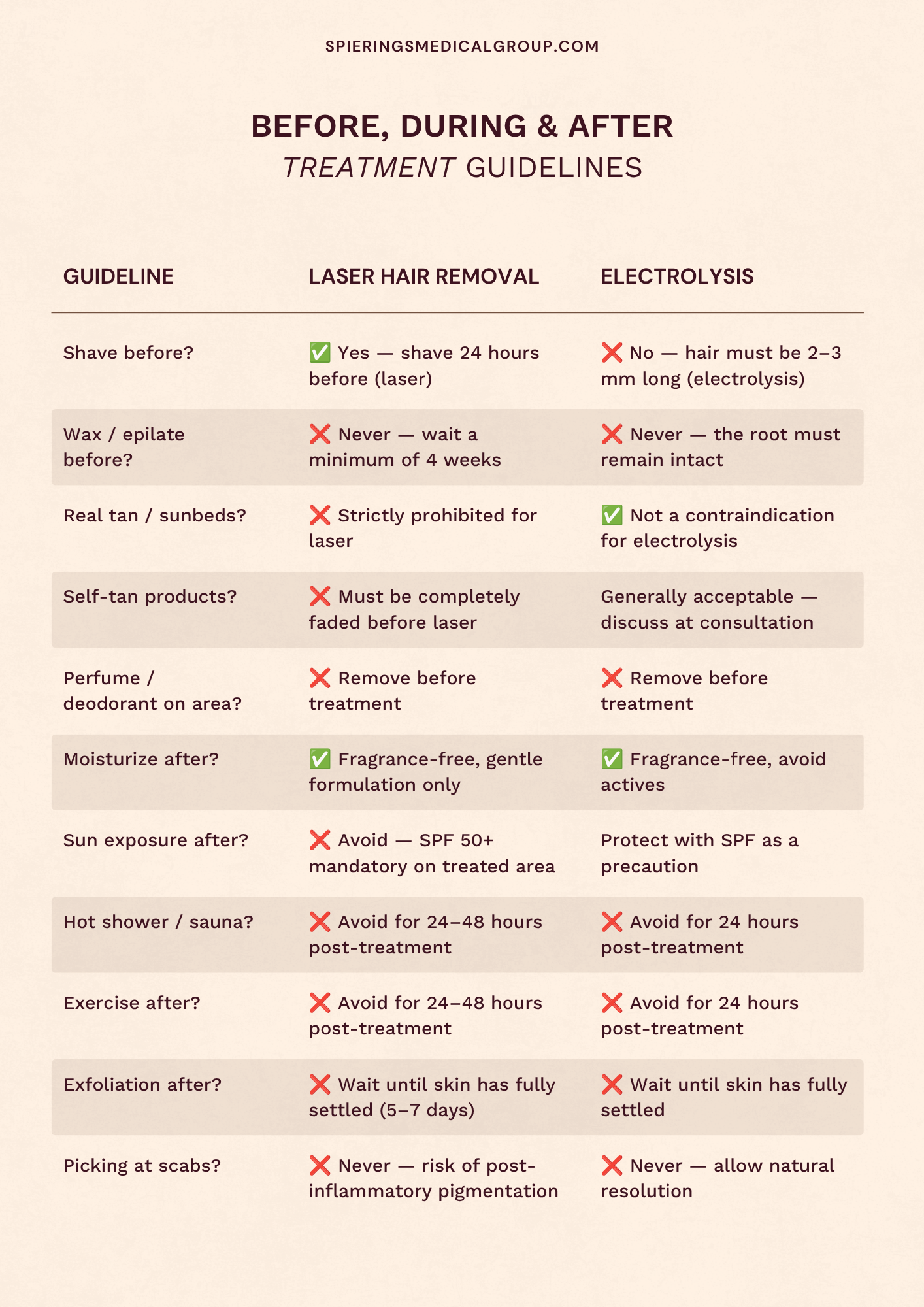
Pinpoint scabbing or crusting over individual treated follicles following electrolysis is a normal part of the healing process. Do not pick, scratch, or attempt to remove these. They will resolve spontaneously within 3 to 5 days without leaving permanent marks, provided they are left undisturbed.
Preparing for Your Treatment
Required:
- Allow hair to grow to at least 2 to 3 mm in length before your appointment. The hair must be visible above the skin surface for the probe to follow the follicle accurately
- Apply topical anaesthetic cream 20 to 40 minutes prior to your appointment if advised, under occlusion
- Arrive with the treatment area clean and free of all products — no deodorant, moisturiser, or cosmetics
- Stay well hydrated in the 24 hours before treatment. Hydrated skin conducts the electrical current more effectively, improving both comfort and efficacy
- Disclose any new medications, supplements, or changes to your skincare regimen since your last session
- Wear loose-fitting clothing that allows unobstructed and comfortable access to the treatment site
- Inform us if you have a pacemaker, implanted defibrillator, or any active implanted electronic device — electrolysis requires special consideration in these cases
Not permitted:
- Do not shave immediately before your electrolysis appointment. Unlike laser, electrolysis requires the hair to be present and visible — shaving on the day will result in the session being rescheduled
- Do not wax, thread, epilate, or use any hair removal method that extracts the root for a minimum of 4 weeks prior to treatment. The intact follicle is essential for effective probe placement
- Do not use depilatory creams in the treatment area in the week preceding your appointment
- Do not apply tretinoin or any retinoid-class product to the treatment area on the day of treatment
- Avoid intense physical exercise, hot baths, saunas, or steam rooms on the day of your appointment
- Do not apply perfume, oil-based products, or heavy emollients to the treatment area before your session
- Do not consume excessive caffeine or alcohol in the hours before treatment — both can heighten skin sensitivity and discomfort during the procedure

Choosingtherightdoctororclinicshouldn'tfeelrushed.
If you have a question or want to know more before booking, just ask!