
Bowen's Disease
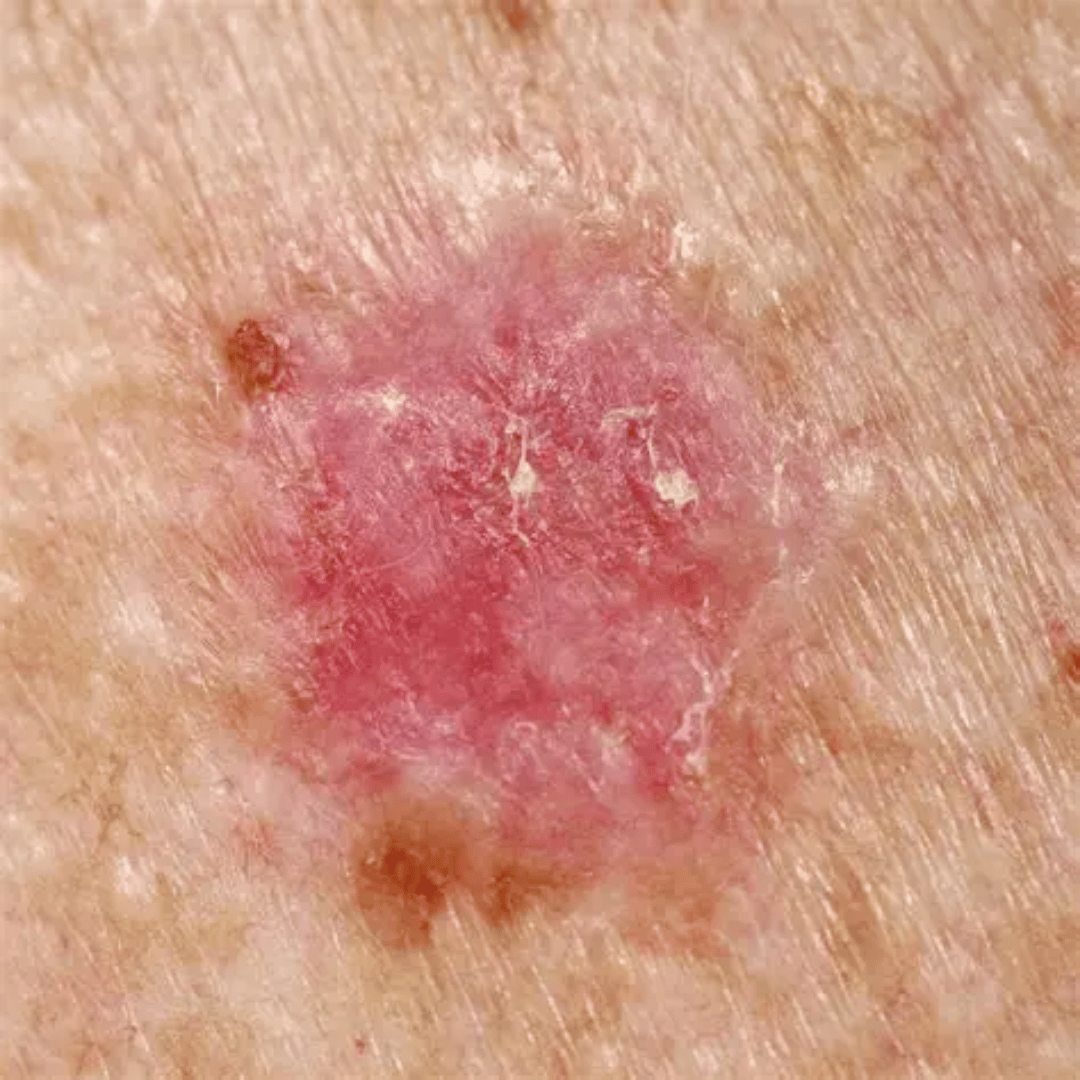
We assess each case carefully and select the most appropriate treatment based on lesion size, location, and patient factors, ensuring clear management with appropriate follow-up to monitor for recurrence.

MEDICAL GROUP
The Spierings Medical Group provides specialist diagnosis and treatment of Bowen's disease, offering consultant-led care for this early, intraepidermal form of squamous cell carcinoma. Bowen's disease is often slow-growing and asymptomatic, which can delay presentation, but the potential for progression to invasive disease makes accurate recognition and timely treatment essential.
What is Bowen's Disease?
Bowen's disease, also known as squamous cell carcinoma in situ, is an early form of skin cancer confined to the outermost layer of the skin (the epidermis). At this stage, abnormal keratinocytes are present but have not yet invaded deeper tissues. While it is considered a non-invasive condition, Bowen's disease carries the potential to progress into invasive squamous cell carcinoma if left untreated. Clinically, it often presents as a persistent, slowly enlarging patch that may be mistaken for benign inflammatory skin conditions. For this reason, accurate recognition and timely diagnosis are essential.
What are the Types of Bowen's Disease?
Bowen's disease does not have rigid subtypes in the same way as other dermatological conditions; however, it may present in several clinical patterns.
- Classical Bowen's Disease - Typically appears as a well-defined, red or pink scaly patch with an irregular border. The surface may be crusted or slightly thickened.
- Pigmented Bowen's Disease - A less common variant in which the lesion appears darker due to increased melanin. It may resemble other pigmented lesions, requiring careful clinical evaluation.
- Verrucous (Warty) Bowen's Disease - Characterised by a thicker, roughened surface that may resemble a wart. This form can be more hyperkeratotic and clinically distinct.
- Genital Bowen's Disease (Erythroplasia of Queyrat) - Occurs on mucosal or semi-mucosal surfaces, presenting as a red, velvety plaque. This variant requires particular attention due to a higher risk of progression.
What Causes Bowen's Disease?
Bowen's disease arises from cumulative DNA damage within keratinocytes, leading to uncontrolled cellular proliferation confined to the epidermis. Ultraviolet (UV) radiation is a primary contributing factor, particularly in sun-exposed areas. However, other carcinogenic influences may also play a role. At a cellular level, mutations disrupt normal growth regulation, resulting in atypical cells that occupy the full thickness of the epidermis without breaching the basement membrane.
Several factors contribute to the development of Bowen's disease:
- Chronic ultraviolet (UV) exposure - Long-term sun exposure remains the most significant risk factor, particularly in fair-skinned individuals
- Age and cumulative damage - It is more commonly observed in older adults due to prolonged environmental exposure
- Immunosuppression - Reduced immune surveillance increases susceptibility to abnormal cell proliferation
- Human Papillomavirus (HPV) - Certain subtypes are associated with lesions in genital areas
- Previous skin injury or radiation exposure - Areas of prior damage may be more vulnerable to malignant transformation
How is Bowen's Disease Treated?
Management aims to eliminate abnormal cells while preserving surrounding healthy tissue. The choice of treatment depends on lesion size, location, and patient factors.
- Topical Therapies - Medications applied directly to the skin may be used to target abnormal cells, particularly in superficial or larger areas.
- Cryotherapy - Controlled freezing is commonly used to destroy affected tissue, particularly for smaller lesions.
- Curettage and Cautery - A procedural approach involving removal of the lesion followed by controlled cauterisation of the base.
- Photodynamic Therapy (PDT) - A field-based treatment that uses a light-activated compound to selectively target abnormal cells, particularly useful for larger or cosmetically sensitive areas.
- Surgical Excision - Complete removal may be recommended in certain cases to ensure clear margins, particularly if there is concern for progression.
Bowen's disease represents an early, intraepidermal stage of skin cancer within the broader spectrum of squamous cell carcinoma. While progression is not inevitable, the potential for invasive transformation necessitates appropriate treatment and follow-up. Lesions are often slow-growing and asymptomatic, which can delay presentation. Persistent, non-healing, or unusual patches of skin should therefore be clinically assessed.
Ongoing sun protection is essential in reducing further skin damage and preventing additional lesions. Daily use of broad-spectrum sunscreen, combined with protective clothing and avoidance of peak UV exposure, remains a cornerstone of long-term skin health particularly in high UV environments. Regular skin surveillance supports early detection and timely management.

Choosingtherightdoctororclinicshouldn'tfeelrushed.
If you have a question or want to know more before booking, just ask!