
IPL Skin Treatment
Every treatment is preceded by a thorough clinical assessment and patch test. We do not perform IPL without first confirming suitability, as skin tone, active conditions, and current medications all affect both safety and outcome.
MEDICAL GROUP
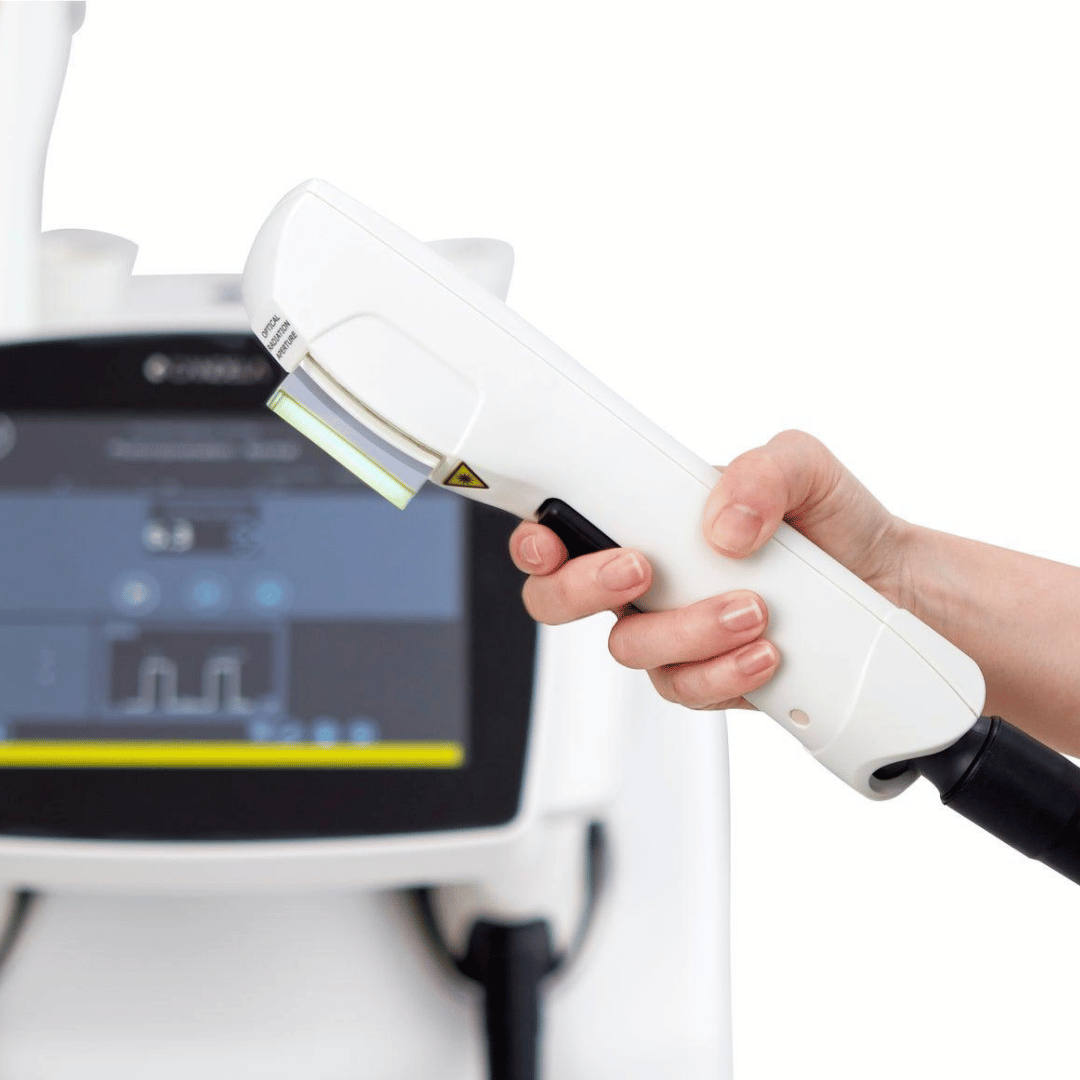
The Spierings Medical Group offers IPL treatment using the Nordlys Ellipse by Candela, providing consultant-led care for patients looking to address pigmentation, redness, rosacea, vascular lesions, and overall skin tone and texture. IPL is a non-ablative light-based treatment that works progressively over a course of sessions with minimal disruption to daily life.
How IPL Works
IPL is often misunderstood as a laser. It is not. IPL delivers a broad spectrum of light wavelengths simultaneously, which are filtered to target specific chromophores, meaning light-absorbing targets, in the skin. These include melanin in pigmented lesions, oxyhemoglobin in blood vessels, and water in the dermis for general rejuvenation.
Because IPL is non-ablative, it does not remove the skin surface. Instead it produces a gentler, progressive response with significantly less downtime than CO2 laser. Results build over a course of treatments as the skin clears, regenerates, and responds to repeated gentle thermal stimulation.
The Nordlys Ellipse is a clinically established IPL platform with precise filtering technology that allows targeted treatment of specific concerns with a high degree of control over the delivered energy and wavelength range.
What IPL Treats
- For pigmentation and sunspots, IPL light is absorbed by melanin in pigmented cells. These cells heat up and are broken down by the immune system, rising to the surface as temporarily darkened spots before shedding away and leaving clearer skin underneath. This darkening immediately after treatment is a completely normal and expected response, not a cause for concern. The treated pigment typically sheds naturally within 7 to 14 days.
- For redness and rosacea, the haemoglobin in dilated blood vessels selectively absorbs IPL energy. The vessel wall is damaged, collapses, and is gradually reabsorbed by the body. Over a course of treatments, diffuse redness and visible capillaries become progressively less apparent. IPL is one of the most effective treatments available for the erythema and visible vessels of rosacea when performed correctly on an appropriate patient. We do not perform IPL on actively flaring rosacea skin.
- For vascular lesions including spider naevi, thread veins, and superficial vascular lesions, the mechanism is the same as for rosacea, selective absorption by haemoglobin leading to vessel closure and reabsorption.
- For skin rejuvenation, the thermal effect of IPL at the dermal level stimulates fibroblast activity and mild collagen remodelling, leading to gradual improvements in skin texture, pore size, and overall radiance over a course of treatments.
- For acne, IPL targets both the porphyrins produced by Cutibacterium acnes bacteria and the inflammation associated with active lesions. It is most effective for inflammatory acne as part of a comprehensive treatment plan that includes appropriate topical or systemic therapy. It is not a standalone treatment for acne and is unlikely to be the most appropriate primary option for severe or predominantly comedonal acne.
How Many Sessions Are Needed
For most concerns including pigmentation, redness, and vascular lesions, a course of 3 to 6 sessions spaced 3 to 4 weeks apart is the clinical standard. Improvement is gradual and cumulative. Most patients notice meaningful change after sessions 2 and 3, with the full result apparent 4 to 6 weeks after the final session.
After completing an initial course, maintenance sessions every 6 to 12 months help sustain results, particularly given that ongoing UV exposure will generate new pigmentation and vascular changes over time.
What to Expect During and After Treatment
IPL is generally well tolerated without anaesthetic, though a topical numbing cream can be applied beforehand for more sensitive patients. The sensation is typically described as a warm snap or brief flick, manageable and brief. Following treatment, the skin will feel warm and mildly flushed, similar to mild sunburn. This settles within a few hours to 24 hours.
Pigmented spots often appear temporarily darker immediately after treatment. This is a sign the treatment is working. Do not pick or exfoliate these spots. Allow them to shed naturally over 7 to 14 days.
Following your session, avoid UV exposure, heat, and active skincare products including acids and retinoids for a minimum of 5 to 7 days. Apply SPF 50+ daily from the morning after your session onwards. Gentle cleansing and a simple fragrance-free moisturiser are all that is required during the immediate post-treatment period.
Important Considerations
- IPL is most effective and safest for Fitzpatrick skin Types I to III (fair to medium). In darker skin tones, the higher background melanin in the epidermis competitively absorbs IPL energy intended for the target, increasing the risk of epidermal damage and post-inflammatory hyperpigmentation. For patients with darker skin tones, we will recommend alternative technologies better suited to their phototype.
- Active tan, residual UV pigmentation, and self-tanning products are all contraindications. The treatment area must be free of any tan for a minimum of four weeks before treatment. This is the most common reason appointments are rescheduled.
- A patch test is performed at every initial consultation. Please attend this appointment even if you have had IPL elsewhere previously, as parameters vary significantly between devices.
- We do not perform IPL on actively flaring or inflamed skin. If you are experiencing an active rosacea flush or a significant acne breakout, treatment will be deferred until the skin has settled.
- For patients currently taking oral isotretinoin or antibiotics that increase photosensitivity, please disclose this at the time of booking. This is reviewed on a per-patient basis and will not automatically prevent treatment.
- We do not perform IPL during pregnancy. This is our standard clinical position based on the principle of precaution. If you are breastfeeding, please discuss this at consultation, as hormonal fluctuations during this period can affect pigmentation and treatment response.
Preparing for Treatment
- Apply SPF 50+ to the treatment area every morning for a minimum of four weeks before your appointment. Do not expose the treatment area to UV light, sunbeds, or UV lamps during this period.
- Do not apply self-tanning products to the treatment area. Residual self-tan significantly increases the risk of an adverse reaction.
- Do not use chemical exfoliants including AHAs and BHAs on the treatment area for 5 days before treatment. Retinoid guidance will be given individually at consultation based on your skin.
- Allow any active skin flare to settle before attending. Arriving for treatment with actively inflamed or flushed skin is not appropriate and treatment will be deferred.
- Arrive with the treatment area clean and free of all products including SPF, moisturiser, and cosmetics on the day of treatment. Disclose all medications and supplements at your appointment, including antibiotics, as some increase photosensitivity.
Choosingtherightdoctororclinicshouldn'tfeelrushed.
If you have a question or want to know more before booking, just ask!