
Facial Telangiectasia
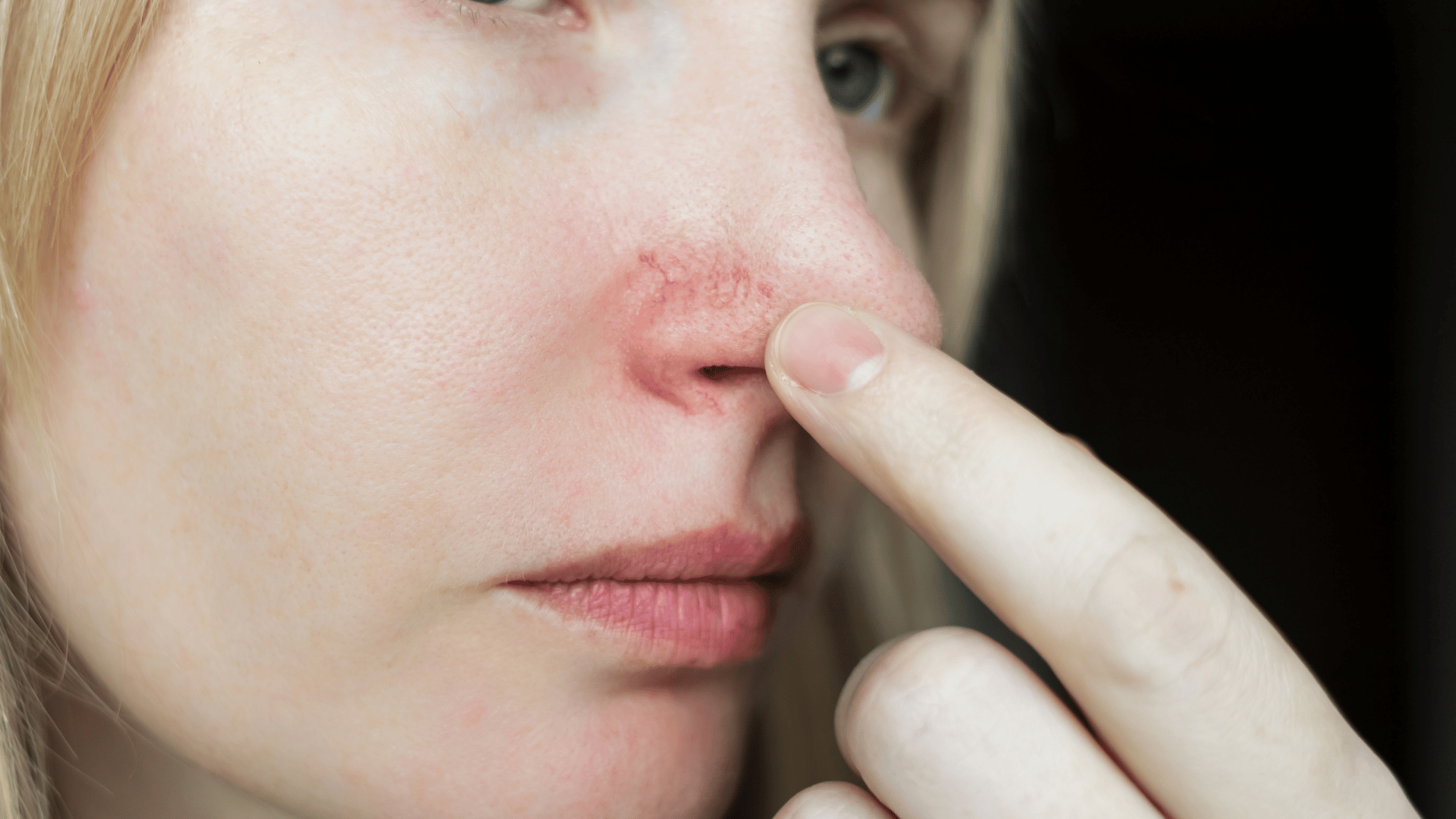
A structured, diagnosis-led approach is essential to determine the underlying cause and guide appropriate management. We do not treat redness as a surface problem. We look at what is driving it and address that directly.

MEDICAL GROUP
The Spierings Medical Group provides specialist assessment and management of facial redness, offering consultant-led care for patients with persistent erythema, flushing, or visible superficial blood vessels. While often perceived as a cosmetic issue, persistent facial redness frequently reflects underlying vascular, inflammatory, or barrier-related dysfunction — and understanding what is driving it is the essential first step.
When a blush becomes a baseline — it's time to understand what's driving it.
Facial redness, or erythema, is a common dermatological concern characterised by visible flushing, diffuse redness, or prominent superficial blood vessels. While often perceived as a cosmetic issue, persistent facial redness frequently reflects underlying vascular, inflammatory, or barrier-related dysfunction.
It may present as a primary condition or as a feature of other dermatological disorders, most notably rosacea. A structured, diagnosis-led approach is essential to determine the underlying cause and guide appropriate management.
Clinical Patterns of Facial Redness
- Transient flushing: Episodic redness often triggered by heat, emotion, or environmental changes. Repeated episodes may lead to more persistent vascular changes over time.
- Persistent erythema: Continuous background redness, most commonly affecting the central face. Frequently associated with vascular instability and conditions such as rosacea.
- Telangiectasia: Visibly dilated superficial blood vessels (broken capillaries), developing from chronic vascular dilation and loss of vessel elasticity.
- Inflammatory redness: Driven by immune-mediated processes rather than vascular changes alone, often accompanying underlying dermatological conditions.
Key Contributing Factors
- Vascular hyper-reactivity — leading to exaggerated and prolonged vasodilation
- Chronic inflammatory conditions — particularly rosacea
- Epidermal barrier dysfunction — increasing sensitivity to external stimuli
- Environmental triggers — UV exposure, temperature extremes, and wind
- Topical irritants — fragrances, alcohol-based products, or harsh exfoliants
- Lifestyle factors — alcohol consumption, stress, and dietary triggers
How Is Facial Redness Treated?
- Topical Therapy: Agents such as azelaic acid or anti-inflammatory formulations may be introduced to stabilise the skin environment, particularly in cases associated with rosacea or sensitive skin.
- Laser and Light-Based Therapy: The most effective intervention for persistent redness. Pulsed dye laser or intense pulsed light (IPL) selectively target dilated vessels, reducing redness that is not responsive to topical therapy.
- Systemic Considerations: Where redness is linked to inflammatory dermatoses, systemic therapy may be required. Particularly relevant in moderate to severe rosacea, where oral anti-inflammatory agents may be indicated.
- Adjunctive Skincare and Photoprotection: A simplified, non-irritating skincare routine is fundamental. Daily high-SPF, broad-spectrum sunscreen is a critical component — UV exposure contributes to both vascular dilation and long-term skin sensitivity.

Choosingtherightdoctororclinicshouldn'tfeelrushed.
If you have a question or want to know more before booking, just ask!